
Why comparable sales are the foundation of every investment decision
Every profitable real estate investment begins with an accurate understanding of value.
 Whether an investor is evaluating a fix-and-flip acquisition, modeling a fix-to-rent stabilization, or projecting a refinance exit, the after-repair value (ARV) and current market value of the subject property drive nearly every downstream calculation. Consequently, the process by which an investor establishes those values determines the quality of every subsequent decision. At the center of that process are comparable sales, or comps. When investors pull comps well, they build defensible valuations, submit realistic offers, and secure lender approvals faster. When they pull comps poorly, they overpay for acquisitions, miss opportunities that would have been penciled with proper analysis, or find their projections rejected at appraisal. This guide presents the framework that experienced Texas real estate investors use to identify, evaluate, and refine comparable sales across Houston, Dallas, San Antonio, Austin, and Beaumont with attention to the specific factors that most influence valuation accuracy.
The most important variable: proximity
 Once the comp pull is complete, proximity becomes the single most important factor in selecting which comparable sales to use. Texas real estate markets can vary dramatically over short distances, with an inexpensive submarket located just minutes from a substantially more expensive one. Failing to maintain tight geographic discipline in your comp selection introduces systematic error into your valuation.
Respect major boundaries
When evaluating proximity, pay particular attention to major physical boundaries. Railroads, highways, industrial corridors, and school district lines can create meaningful value differences on either side. Consequently, a comp located just half a mile from the subject property may not, in fact, be comparable if a highway or district boundary lies between them. Cross-boundary comps should be avoided unless no better options exist, and even then, appropriate adjustments must be made.
Property Size & Layout
After establishing proximity, focus on the property’s physical characteristics. Each of these variables materially affects comparability.
Square footage: stay within 20% on either side
Square footage is one of the most direct drivers of value. As a general rule, comps should fall within approximately 20% of the subject property’s square footage on either side. For instance, if the subject property is 2,500 square feet, appropriate comps range from 2,000 to 3,000 square feet.
Additionally, note that price per square foot is not linear across property sizes. Smaller properties typically command higher price per square foot, while larger properties trade at lower price per square foot. Appraisers understand this pattern well, which is why they are expected to use bracketing comps, some smaller than the subject property and some larger, to triangulate value accurately. If an appraiser fails to include bracketing comps, they are required to explain why and must have a very strong explanation. Investors modeling ARV independently should follow the same practice.
Bottom line, if a property is drastically larger than comparable homes, it is likely overbuilt for the neighborhood, and the additional square footage may add little to no value.
Bedroom count: meet the minimum standard
Bedroom count matters primarily as a minimum threshold. For a standard American family home, three bedrooms and two bathrooms represents the practical baseline. Comps that fall below this threshold: for example, three bedrooms and one bathroom, or two bedrooms and two bathrooms should generally not be used to value a 3/2 property.
On the upper end, however, there is more flexibility. A four-bedroom, 2.5-bathroom comp can be used to value a three-bedroom, two-bathroom subject property because it still meets the minimum standard family buyers expect. The same principle applies to larger properties: once a home clears the practical standard of three bedrooms, 2.5 bathrooms, and a two-car garage, buyers evaluate the property based on other factors rather than continuing to weigh bedroom count linearly.
Construction type: brick versus wood frame
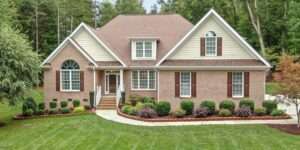 Construction type is another meaningful comparability factor. Brick homes tend to command higher prices than wood frame homes of similar size and layout, largely because brick construction carries higher replacement costs and greater perceived durability. As a general rule, comparing a brick home to wood frame (especially pier and beam) comps, or vice versa, introduces error into your valuation.
An exception exists for higher-end neighborhoods where modern construction standards or premium building materials elevate certain wood frame homes to comparable value. Nevertheless, for most Texas submarkets, matching construction type to construction type produces cleaner comparisons.
Beyond the desk: driving the comps
Pulling comps online is only half of the valuation process. To evaluate comparability accurately, investors must physically inspect the comps and the subject property’s surroundings or, at minimum, conduct a thorough Google Street View examination. Google street view is not the best answer, but can work in some circumstances. Nothing can replace driving the comparable sales yourself as Google street view can be dated or incomplete.
Environmental detractions
Certain environmental factors substantially reduce property value, and these often become apparent only through visual inspection. Key detractions to look for:
- Backing up to an apartment complex, industrial site, or commercial property
- Proximity to a busy road, highway, or high-traffic intersection
- Overhead power lines or utility infrastructure
- Nearby industrial facilities or noise sources
- Unattractive exterior elevations or dated architectural styles
Crucially, a subject property with any of these detractions cannot be validly compared to comps that do not share them. Instead, you must find comparable sales that also share the specific detraction. If, for example, the subject property backs to a highway, look for comps that also back to a highway or a similarly disruptive feature.
Historical adjustments
When comparable properties with the specific detraction are unavailable in the current market, an alternative approach is to examine that same property’s historical sale price relative to the neighborhood average. If the property sold at a discount two or three years ago because of its location, that percentage discount can be applied to current market values with appropriate updating for price appreciation. This method allows you to isolate the value impact of the specific detraction across time.
Building a comp spreadsheet and making adjustments
Investors who consistently produce accurate valuations rely on a structured spreadsheet approach to comp analysis. Rather than relying on mental averages, capture each comparable sale in a defined framework with columns for the key variables: address, sale price, square footage, price per square foot, bedrooms, bathrooms, lot size, construction type, condition, school district, and notable adjustments.
From that structure, apply adjustments systematically:
- Adjust upward for comps that are smaller than the subject property (smaller homes trade at higher price per square foot)
- Adjust downward for comps that are larger than the subject property
- Adjust for condition differences, construction type mismatches, or amenity variations
- Add positive adjustments for premium features present in the subject but absent in comps
- Subtract for detractions present in the subject but absent in comps
This structured approach produces defensible valuations and mirrors the methodology appraisers use during formal valuations. Consequently, investors who follow this process arrive at ARV estimates that are more likely to hold up when a conventional or refinance appraisal is ordered later.
A caution: do not aim to be the highest comp in the neighborhood
 One of the most consequential valuation errors involves projecting an ARV that exceeds every comparable sale in the market. Buyers are generally unwilling to be the highest-priced home in a neighborhood, particularly if the price meaningfully exceeds all other recent sales. Consequently, projecting that a subject property will sell for 10% or 15% above the highest existing comp introduces significant risk into your entire deal model.
If, for instance, no other home in the neighborhood has sold above $300,000, assuming that a somewhat larger subject property will sell for $330,000 or $345,000 represents a substantial assumption without market support. Appraisers make only minimal adjustments in these scenarios, sometimes as small as 25% of the physical size difference. As a result, an investor whose ARV projection depends on being the highest comp is often building a valuation the market will not confirm.
The prudent approach is to select subject properties whose ARV falls within not above the existing distribution of neighborhood comps. When a deal requires an outlier valuation to work, the deal itself is typically the problem, not the market.